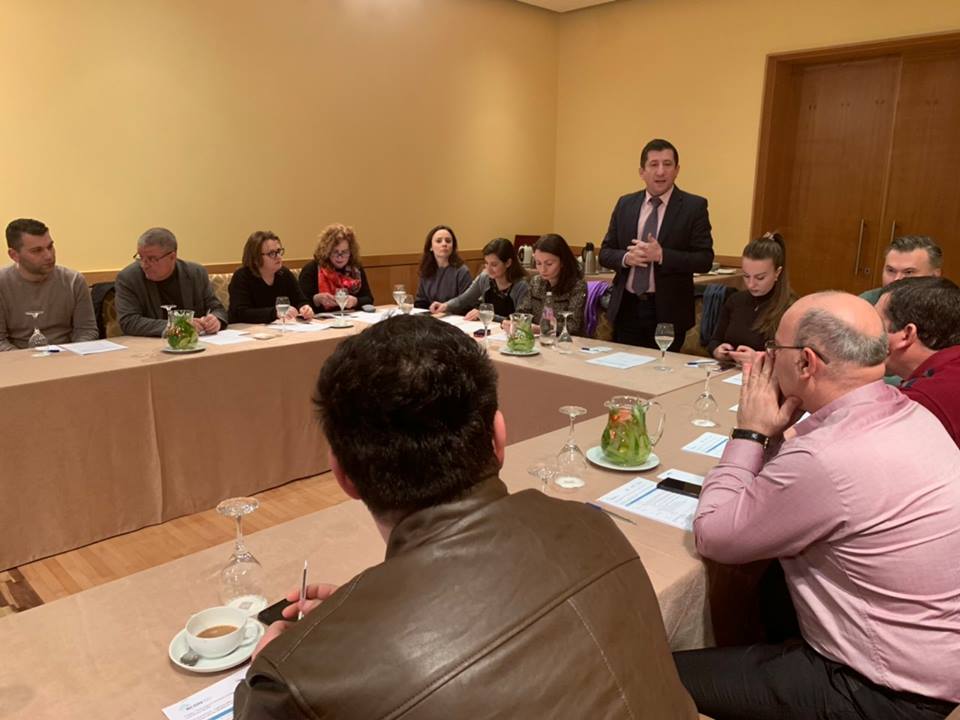
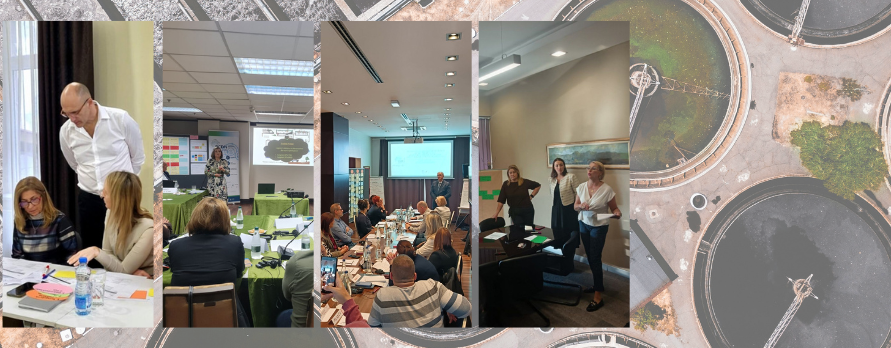
RCDN continues to invest in high-quality training systems by strengthening the competencies of trainers across the water and sanitation sectors in the Western Balkan region. Through a combination of generic and programme-specific Trainings of Trainers (ToTs), RCDN supports local ownership, quality assurance, and the long-term delivery of standardized capacity development activities tailored to regional and national needs.
Strengthening training quality in the Water Sector in Serbia: Generic Training of Trainers (gToT) delivered by UTVSI
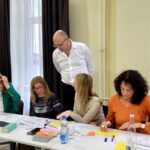

The Association for Water Technology and Sanitary Engineering (UTVSI) delivered a Generic Training of Trainers (gToT) on 13–14 November 2025 in Belgrade, Serbia. The training focused on strengthening methodological skills and supporting the consistent use of UTVSI/RCDN Quality Standards in water-sector training activities.
The two-day training brought together future trainers proposed by UTVSI, all with strong technical backgrounds in drinking water safety. The main aim was to support participants in planning and delivering effective trainings using RCDN’s structured approach. The training focused on training methodology and facilitation, building on participants’ existing technical knowledge. Topics included adult learning principles, basic didactics, training design based on curricula and needs assessments, presentation skills, facilitation techniques, and the practical use of RCDN quality standards. The training was delivered by the RCDN Master Trainers, who supported a practical and interactive learning process.
By the end of the training, participants showed increased confidence in delivering trainings aligned with RCDN standards. The gToT helped strengthen a pool of trainers and confirmed RCDN’s focus on local responsibility, quality assurance, and sustainable training systems across the Western Balkans.
Strengthening regional training capacity in Wastewater Management: RCDN delivers second round of Specific Trainings of Trainers (sToTs)
RCDN continued its work on wastewater capacity development through a second round of Specific Trainings of Trainers (sToTs) under the Wastewater Capacity Development (WW CD) Programmes 1A, 1B, and 2A. These trainings took place between October and November 2025 in Podgorica, Tirana, and Belgrade and focused on strengthening both technical knowledge and training skills of future trainers and moderators from local governments, public utility companies, and sector associations.
- Advancing training capacity for decision makers – WW CD Programme 1A
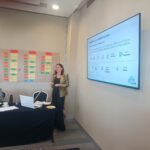

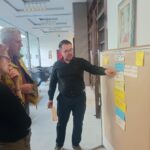
The Second sToT for WW CD Programme 1A – “Introduction to Wastewater Systems for Decision-Makers” was held from 7–9 October 2025 in Podgorica, Montenegro. The training included participants from Local Government Units and Public Utility Companies from Montenegro, Republika Srpska, and the Federation of Bosnia and Herzegovina.
The focus was on preparing trainers to deliver Module 2: Development of Capital Infrastructure Investments. Key topics included project cycle management, legal and institutional frameworks, financing options, and peer exchange. Participants worked with RCDN quality standards and templates to prepare country-level training designs and practice how to present complex investment topics in a clear and practical way for decision-makers.
- Empowering Trainers for Managers and Engineers – WW CD Programme 1B
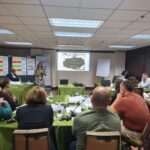
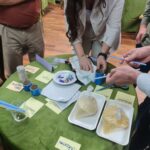

From 14–16 October 2025, RCDN delivered the Second sToT for WW CD Programme 1B – “Introduction to Wastewater Systems for Managers and Engineers” in Tirana, Albania. The training brought together participants from Public Utility Companies and Local Government Units in Albania and Kosovo.
Building on the first sToT earlier in 2025, the training strengthened trainers’ ability to deliver technical and project-related modules. Topics covered wastewater treatment technologies and sludge management, Integrated Water Resources Management (IWRM), Integrated Urban Water Management (IUWM), nature-based stormwater solutions, feasibility studies, cost-benefit analysis, wastewater master planning, and peer exchange. The training combined technical content with practical training methods to support effective delivery at national level.
- Enhancing Operational and Maintenance Expertise – WW CD Programme 2A

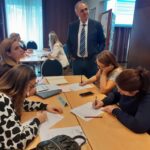

The Second sToT for WW CD Programme 2A – “Enhancement of Technical Capacities of Public Utility Companies for Operation and Maintenance of Wastewater Systems” took place from 4–6 November 2025 in Belgrade, Serbia. The training gathered participants from Public Utility Companies and associations in Bosnia and Herzegovina, Montenegro, and Serbia.
This follow-up training focused on preparing trainers to deliver advanced operational modules. Topics included standard operating procedures, operation and maintenance of complex equipment (such as SCADA systems, aeration, and cogeneration), sludge treatment, energy efficiency, renewable energy, and procurement of consumables and spare parts. Participants also worked on preparing country-level training designs and peer exchanges using RCDN Quality Standards for Training and Peer Exchange.
Across all three programmes, the second round of sToTs focused on practical use, consistent quality, and local responsibility. By strengthening both technical expertise and training skills, RCDN continues to support a pool of trainers able to deliver structured, high-quality wastewater training programmes adapted to national needs.
These trainings support the long-term improvement of wastewater services in the Western Balkans by enabling local institutions and professionals to lead future training activities, support informed decision-making, and improve the operation, planning, and management of wastewater systems.
Looking Ahead
By linking generic and programme-specific Trainings of Trainers, RCDN applies a clear and consistent approach to capacity development across the water and wastewater sectors. This approach supports local expertise, strengthens cooperation across the region, and contributes to more reliable and sustainable water and wastewater services in the Western Balkans.