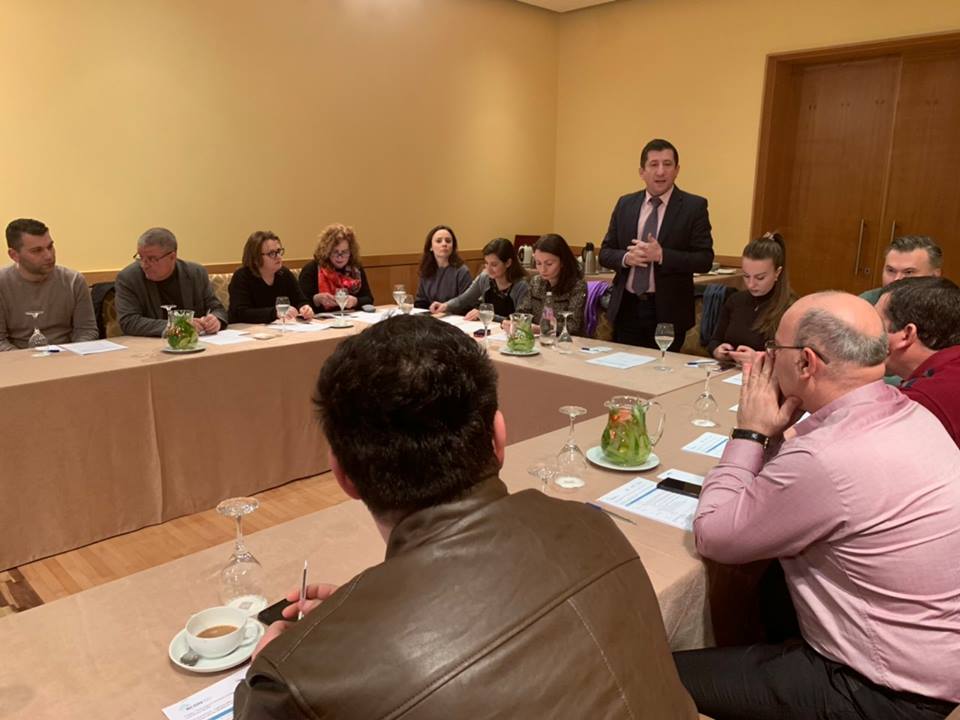
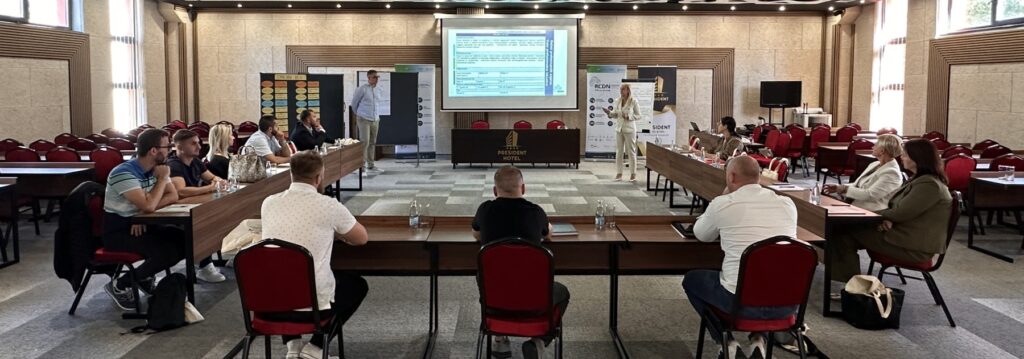
Over the course of the past period, targeted capacity development activities continued to strengthen institutional, technical, and organizational capabilities across the water and sanitation sector in the Western Balkan countries. Through a combination of in-person and digital trainings, partner associations addressed priority topics such as asset management, non-revenue water, and modern training delivery methods, supporting more sustainable and effective water services.
Integrated Asset Management (IAM) Training by UPKP and AMCFBiH
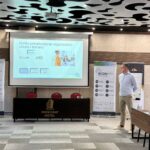
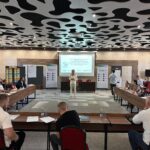
In September 2025, a two-day training on Integrated Asset Management (IAM) in the Water and Sanitation Sector was held in Maglaj, Bosnia and Herzegovina, jointly delivered by the Association of Municipalities and Cities of the Federation of Bosnia and Herzegovina (AMCFBiH) and the Association of Employers of Utility Companies (UPKP). The training brought together local decision-makers, municipal staff, and senior representatives of public utility companies working in water supply, drainage, and wastewater treatment.
The training focused on strengthening the understanding of integrated asset management principles and their application at the local level. Participants explored legal, institutional, technical, and financial aspects of IAM, including asset registers, asset criticality, life-cycle costing, revaluation, and financing strategies. Interactive sessions and group work encouraged joint analysis of shared challenges between municipalities and utilities.
Participants evaluated the training very positively, highlighting its relevance to everyday infrastructure management challenges. The training reinforced the importance of systematic asset inventories, coordinated planning between local governments and utilities, and long-term financial approaches to ensure sustainable water and sanitation services.
Non-Revenue Water (NRW) Training by AWRS
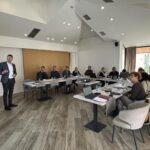
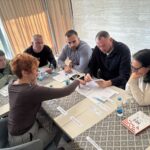
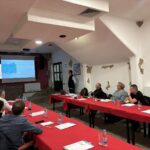
In November 2025, a series of one-day trainings on Non-Revenue Water (NRW) were delivered in Banja Luka, Bijeljina, and Istočno Novo Sarajevo by the Association Waterworks of Republic of Srpska (AWRS). The trainings gathered participants from public utility companies to address water losses as a key operational and financial challenge.
The sessions focused on strengthening understanding of the institutional and technical framework for NRW management, clarifying roles and responsibilities, and improving organizational approaches to loss control. Core topics included water balance development, performance indicators, district metered areas, active leakage control, and infrastructure data management, supported by practical examples and group work.
Participant feedback confirmed a high level of satisfaction with the content and delivery. The training highlighted the need to move from ad-hoc interventions toward systematic, long-term NRW management, with future capacity development expected to focus on NRW planning, GIS applications, and advanced leakage detection methods.
NALAS Training on E-Learning Course Design
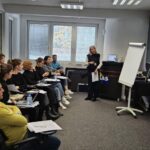
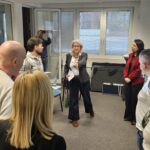

In November 2025, a training on E-Learning Course Design was held in Skopje, delivered by the NALAS. The training brought together participants from the RCDN partner associations of local governments and public utility companies.
The training focused on strengthening capacities for designing, implementing, and managing e-learning courses tailored to the associations’ members needs. Participants explored the full e-learning cycle, from instructional design and content development to course delivery and evaluation, supported by practical exercises and peer exchange.
By the end of the training, participants reported increased confidence in using e-learning tools and methodologies. The training marked an important step in strengthening digital training capacities across the RCDN network and supporting more flexible and accessible capacity development approaches.
These trainings reflect a continued commitment to strengthening professional capacities across the water and sanitation sector. By addressing both technical priorities and modern learning approaches, the activities contribute to more resilient institutions, improved utility performance, and sustainable service delivery across the region.